By Marcela Ayres
BRASILIA, March 5 (Reuters) - Evidence that two senior regulators at Brazil’s central bank secretly advised embattled banker Daniel Vorcaro has sent shockwaves through the capital Brasilia, threatening to drag the institution deeper into a snowballing scandal.
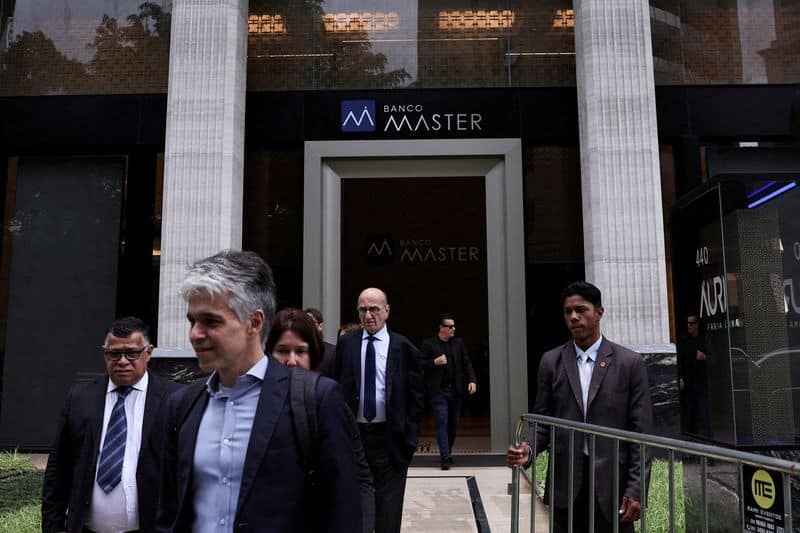
The revelations add to a widening blast radius surrounding Vorcaro, owner of the liquidated Banco Master, whose downfall has exposed a network of influence and conflicts of interest shaking trust in some of Brazil’s most powerful institutions.
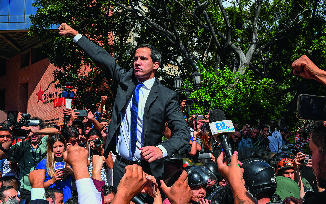
Vorcaro was arrested on Wednesday in the latest phase of an ongoing criminal investigation, accused of bribing the two central bank officials - in addition to plotting to attack and intimidate several people he perceived as acting against his interests with an associate he called “Sicario,” named after the hit men employed by Mexican cartels.
Among his targets were former employees, domestic workers and journalists.
For months, Brazilians have watched as the probe - first focused on fraud in Master’s loan portfolio - grew to implicate public pension funds, a state-owned bank and high-ranking officials with ties to Vorcaro.
Unusual interventions by a federal audit court and the Supreme Court questioning the lender’s shutdown - despite neither body having banking supervisory authority - failed to derail the investigation but added to questions about the banker’s outsized influence.
Amid all that, the central bank’s decision in November to close Banco Master had reinforced views of the regulator as a bastion of hard-nosed public servants steeled against Brazil’s politics.
Federal police shattered those impressions on Wednesday, alleging that Vorcaro likely bribed former central bank director Paulo Sergio Neves de Souza and Belline Santana, ex-head of the banking supervision department, for tips and advice, according to cellphone messages obtained through court-authorized access to communications records.
Reuters could not immediately reach Souza or Santana or identify their lawyers.
The central bank declined to comment on the implications for its reputation or regulatory decisions involving the officials.
In a public statement, the central bank said the federal police probe was key to clarifying the facts and any violations would receive the appropriate sanctions under the law.
‘HORRIFYING’
A person with direct knowledge of the recent investigations said the conduct uncovered was “absolutely unacceptable, absurd and horrifying,” even if the central bank’s decision-making structure ultimately led the regulator to the right outcome.
Despite any dissent from Souza and Santana, the source said, the central bank blocked regional lender BRB’s bid to acquire Banco Master before liquidating the troubled lender.
Still, the revelations have amplified criticism that the central bank may have taken too long to act, allowing Master’s problems to deepen while technical assessments that passed through Souza and Santana may have downplayed the severity of the situation, undermining decisions that could have come sooner.
“The central bank was slow to rein in Master and it was slow to liquidate it,” said another source with knowledge of the regulator’s decision-making.
Souza, who was directly responsible for overseeing banks as director of supervision, sat for nearly six years on the rate-setting Copom committee, between 2017 and 2023 - a period when Banco Master was expanding aggressively.
A court decision authorizing Wednesday’s police operation cited messages showing he and Santana helped Vorcaro with regulatory matters, including prior review of filings to the central bank.
The ruling cited evidence they may have received bribes while in their senior roles, including efforts by Vorcaro to formalize sham service contracts through consulting firms, which were then used to transfer funds to the two officials.
Both officials remained at the central bank in different banking supervisory roles until January, when they stepped down from their senior posts amid an internal probe. They remained career staff, now suspended by Wednesday’s court order. A formal dismissal would require separate administrative proceedings.
“I was surprised and, above all, saddened. There is deep dismay,” said one former director who worked with Souza. Three other sources who served alongside him voiced similar shock.
“It is very sad. But any wrongdoing by two officials must be separated from the institution and its staff,” one source said, adding that the central bank’s own internal reviews contributed to the investigation by federal police and prosecutors.
A federal police source, also speaking on condition of anonymity, agreed that findings so far pointed to corruption of individual civil servants rather than institutional failure.
CAREER PUBLIC SERVANT
A central bank public employee since 1998, Souza joined the bank’s board under former President Michel Temer and remained through the administration of former President Jair Bolsonaro into the early months of President Luiz Inacio Lula da Silva’s current term, leaving in July 2023.
His tenure overlapped with the rapid rise of Banco Master, built largely on the sale of high-yield debt marketed to retail investors as covered by the Credit Guarantee Fund (FGC).
When Banco Master was previously known as Banco Maxima before Vorcaro bought it in 2017, it was already on the central bank’s confidential watchlist of troubled institutions, flagged for lending that ignored principles of “selectivity, liquidity and guarantees.”
Approval for the young banker to take over the rebranded bank came in 2019, under then-governor Roberto Campos Neto. Two sources familiar with Vorcaro’s influence said he long benefited from strong political ties in Brasilia that helped him cast a risky growth model as a boon for competition.
Although the lender held less than 1% of Brazil’s banking assets, its collapse last November - amid a cash crunch and mismanagement cited by the central bank - has cost the FGC fund some 40 billion reais ($7.7 billion), roughly a third of its available resources, a bill that later rose with the liquidation of other institutions under its umbrella.
The FGC is financed with mandatory contributions from banks, especially larger lenders, which will bear the brunt of new funding.
That process gained breathing room this week after the central bank allowed 30 billion reais in reserve requirements that would otherwise have been deposited at the regulator to be redirected to the FGC this year.
($1 = 5.2312 reais)
(Reporting by Marcela AyresAdditional reporting by Bernardo Caram;Editing by Brad Haynes and Aurora Ellis)